Hiking Food & Snack Calculator — Trail Fuel Planner | Hiking Calorie Calculator
Calculate how much food to pack for a day hike. Plan trail snacks, food weight, and hourly carbs to keep your energy high.
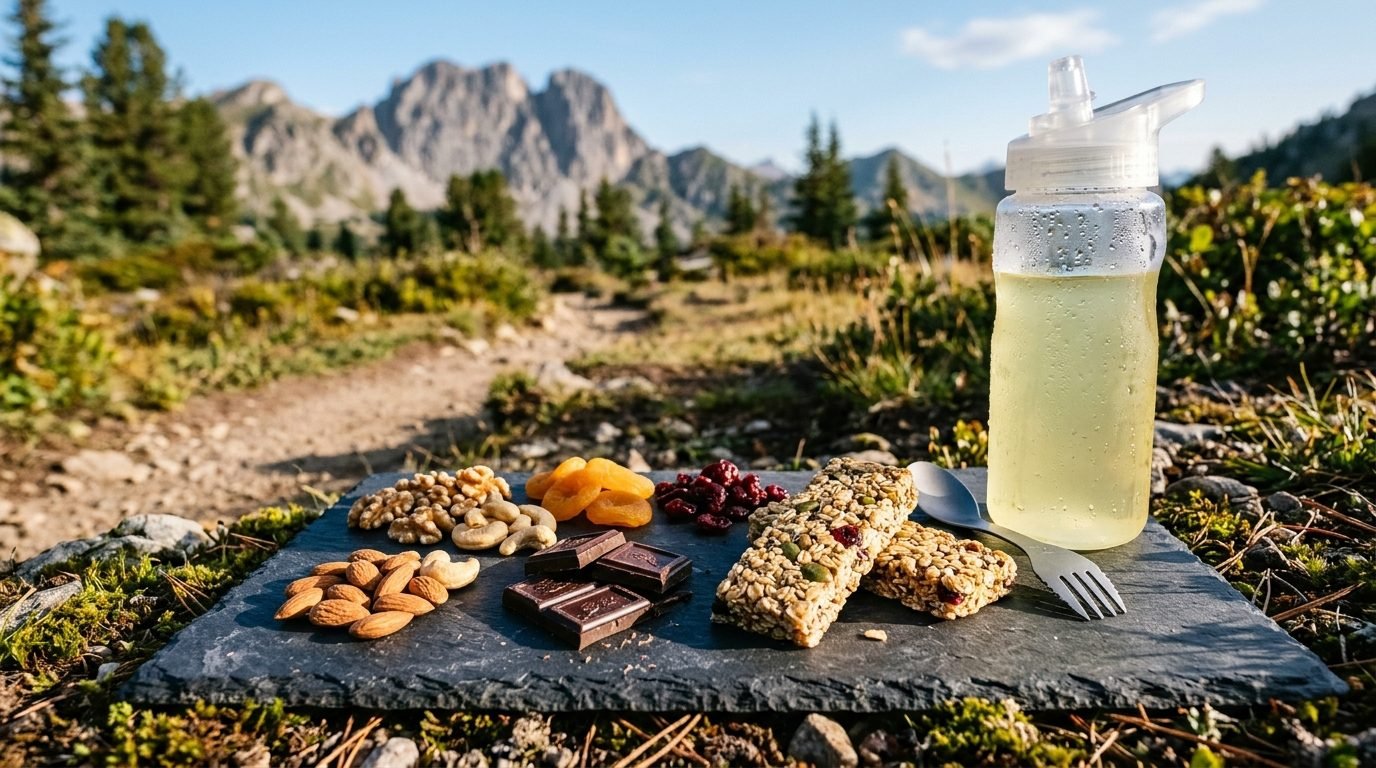
Trail Snack Plan
30–60g Carbs / HourBased on sports nutrition guidelines (30–60g carbs/hour). Keeps energy steady on trail without overloading your stomach. Read formula documentation →
Trail Energy Level & Hourly Snacking Guide
See how snacking preserves your body's energy. Without regular carbohydrate snacks, energy drops sharply after 90 minutes. With steady snacks, your energy stays steady all day.
Worked Example: 5-Hour Mountain Day Hike Snacks
A hiker going on a 5-hour mountain hike with an estimated burn of 2,100 calories. The goal is steady on-trail snacking (replacing 40% of calories while walking) plus a 15% emergency reserve.
Example Inputs
- Hike Duration
- 5 hours 00 minutes
- Estimated Calories Burned
- 2,100 kcal
- On-Trail Target Snacks
- 40% replacement (~840 kcal)
- Emergency Reserve
- 15% buffer (+126 kcal)
- Packed Trail Snacks
- 2 Oat Bars, 100g Trail Mix, 2 Chews
Follows sports nutrition recommendations for endurance walking. Eating 38g of carbs per hour keeps your energy high and prevents sudden fatigue without causing an upset stomach.
Trail Food Reference Table by Hike Length
Choose a trail difficulty to see recommended food weight, hourly carbohydrates, and water volumes for different hike durations.
| Hike Duration | Est. Total Burn | On-Trail Food Target | Food Weight | Hourly Carbs | Water Needed |
|---|
How the Calculation Works
Proven sports science formulas and practical trail estimates.
The Science of Trail Fueling: Preventing Sudden Fatigue
During uphill hiking, your working leg muscles burn through stored carbohydrate fuel rapidly. If this fuel runs out, hikers experience sudden, heavy exhaustion (often called "bonking").
Sports nutrition guidelines recommend:
"For endurance exercise over an hour, hikers should eat 30 to 60 grams of easy-to-digest carbohydrates per hour to maintain steady energy and prevent leg fatigue."
Rather than eating big, heavy meals while walking, successful trail fueling relies on regular small snacks (energy bars, dried fruit, trail mix) that digest easily while you keep moving.
Why Small, Steady Snacks Work Best
Your stomach can only absorb a certain amount of sugar and food per hour while your body is exercising. Trying to eat huge amounts at once sends blood to your stomach instead of your legs, causing bloating and cramps. Eating a small 150 to 200 calorie snack every 45 to 60 minutes keeps energy smooth and stomachs happy.
Trail Snacking & Digestion Tips
Practical nutrition tips to stay energized without nausea or stomach cramps.
Eat Before You Feel Hungry
Take a few bites of food every 45 minutes. By the time your brain actually feels hungry on the trail, your body's energy reserves are already running low.
Balance Sweet Bars with Salt
After a few hours, sweet energy bars can start tasting cloying. Pack savory, salty snacks like salted nuts, jerky, cheese, or pretzels to replace lost sodium and keep your appetite up.
Refuel After You Finish
Eat a good meal with carbohydrates and protein within an hour of finishing your hike. Your muscles absorb nutrients quickly right after exercise, speeding up recovery for your next adventure.
Frequently Asked Questions
Clear, helpful answers to common questions about this calculation.
Do I need to eat back all the calories I burn while hiking? +
No! On day hikes, trying to eat back 100% of the calories you burn while walking will make you feel full, bloated, and sluggish. Your body has plenty of stored energy. Aim to replace 30% to 50% of your burned calories on the trail with light snacks, and eat a hearty meal after you finish.
How many carbohydrates should I eat while hiking? +
Sports nutrition guidelines recommend 30 to 60 grams of easy-to-digest carbohydrates per hour on hikes lasting longer than 1 to 2 hours. That is about one energy bar, a small bag of dried fruit, or a banana every hour.
What is calorie density and why does it matter for pack weight? +
Calorie density simply means how many calories you get per ounce of food. Foods high in healthy fats (like nuts, chocolate, and peanut butter) pack 130 to 160 calories per ounce, while heavy wet foods (like fresh fruit or canned goods) provide only 15 to 30 calories per ounce. Packing calorie-dense snacks keeps your pack light.
How much emergency food should I pack? +
Always pack 15% to 25% more food than you plan to eat. If you take a wrong turn, wait out a storm, or help a fellow hiker, having an extra meal or energy bars keeps you safe.
How much water and electrolytes should I drink per hour? +
In comfortable weather, aim for about half a liter (16–20 oz) of water per hour. In hot summer weather or on steep climbs, drink up to a full liter per hour and include electrolytes (salty snacks or hydration powders) to prevent cramps.
What does "bonking" mean and how do I avoid it? +
"Bonking" or "hitting the wall" is the sudden crash in energy, dizziness, and heavy legs that happens when your body runs completely out of stored carbohydrates. Eating a small snack every 45 to 60 minutes prevents this crash completely.
Related Trail Calculators
Backpacking Food Weight
Convert your daily calorie needs into total food weight in pounds and ounces based on how calorie-dense your snacks and meals are.
Multi-Day Trekking
Plan multi-day backpacking trips with day-by-day calorie estimates, taking into account how your pack gets lighter as you eat your food.
Uphill Hiking Calories
Calculate calories burned on uphill trails and mountain climbs based on hill steepness, elevation gain, hiking speed, and backpack weight.
Plan Your Whole Hike
Use our main Hiking Calorie Calculator to combine distance, hike time, hill climbing, trail terrain, and trail snacks into one clear plan.
Open Main Calculator →