Hiking Calorie Calculator
Reference Charts

Hiking Calorie Burn Reference Charts

Quick-reference charts showing total calories burned hiking by body weight, trail difficulty, backpack weight, and hike time. Switch between Imperial and Metric units or choose any hike duration.

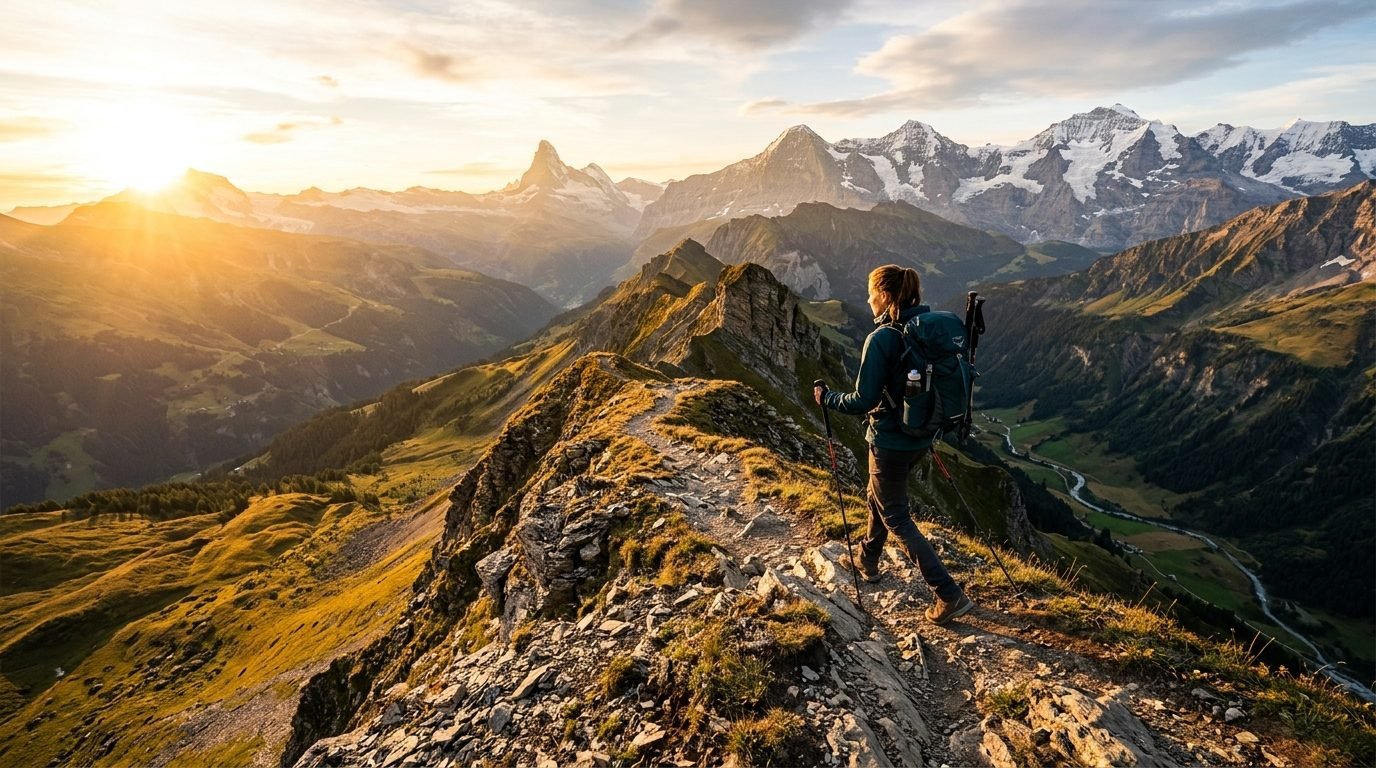
Hiker ascending scenic alpine trail ridge at sunrise
Body Weight × Time × MET 30m – 8h Matrix
Weight Units:
Duration:

Calories Burned in 1 Hour of Hiking

Estimated total calories across 7 common trail scenarios

Standard Physical Activity Guidelines
Trail Type & Effort
120 lbs
(55 kg)
140 lbs
(64 kg)
160 lbs
(73 kg)
180 lbs
(82 kg)
200 lbs
(91 kg)
220 lbs
(100 kg)
240 lbs
(109 kg)
Gentle Stroll on Flat Path
Easy Pace (3.8×)
Flat dirt path or paved walkway
209 kcal 243 kcal 277 kcal 312 kcal 346 kcal 380 kcal 414 kcal
Standard Trail Hike
Moderate Pace (5.3×)
Woodland trails with gentle rolling hills
292 kcal 339 kcal 387 kcal 435 kcal 482 kcal 530 kcal 578 kcal
Rugged Mountain Trail
Brisk Pace (6.0×)
Uneven rocky trails, roots, mixed hills
330 kcal 384 kcal 438 kcal 492 kcal 546 kcal 600 kcal 654 kcal
Steep Hill Climb (No Pack)
Vigorous Climb (7.0×)
Steady mountain climb on steep trails
385 kcal 448 kcal 511 kcal 574 kcal 637 kcal 700 kcal 763 kcal
Mountain Hike with Daypack (15 lb Pack)
Strenuous Pace (7.8×)
Mountain trail carrying water, layers, and snacks
429 kcal 499 kcal 569 kcal 640 kcal 710 kcal 780 kcal 850 kcal
Multi-Day Backpacking (35 lb Pack)
Heavy Pack (8.8×)
Backpacking trip with tent, stove, and food
484 kcal 563 kcal 642 kcal 722 kcal 801 kcal 880 kcal 959 kcal
Steep Climb with Heavy Pack
Extreme Effort (10.0×)
Steep mountain ascent with full backpack
550 kcal 640 kcal 730 kcal 820 kcal 910 kcal 1,000 kcal 1,090 kcal
Rule of Thumb

Calories Per Mile

For an average 160 lb (73 kg) hiker, walking on a flat dirt trail burns about 85–95 calories per mile. Adding a 1,000-ft climb increases this to 120–140 calories per mile.

Calculate by Distance →
Hills & Slopes

Uphill Climbing Multiplier

Climbing a moderate 10% mountain slope burns roughly twice as many calories as walking on flat ground at the same speed.

Uphill Calculator →
Backpack Weight

Pack Weight Impact

Carrying a 30 lb (14 kg) backpack increases your calorie burn by 25% to 40%, with the extra effort growing even faster on climbs.

Backpack Calculator →

How to Use These Calorie Charts

These reference tables provide standard baseline estimates based on sports science research. While very helpful for trip planning, your actual calorie burn will also depend on four practical factors:

1

Your Body Weight

Heavier hikers burn more total calories because moving a larger body weight against gravity takes more physical work on every step.

2

Trail Surface & Footing

Walking on loose gravel, mud, sand, or snow burns 20% to 50% more calories than walking on a firm dirt trail or road.

3

Climbing & Downhill Braking

Climbing lifts your body weight against gravity, while steep downhills force your thigh muscles to brake each step, burning extra calories.

4

Pack-to-Body Weight

Carrying 30 lbs feels much heavier to a 120 lb hiker (25% of body weight) than to a 220 lb hiker (14% of body weight).