Backpacking Food Weight Calculator — Calorie Density & Ounces per Day
Calculate total food weight to pack for backpacking trips. Optimize food payload by targeting 125–150 kcal per ounce and 400–500 kcal per 100 grams.
Trip Food Planning
Calculates total food weight based on your daily calorie target and the energy density of your food choices. Read formula documentation →
Food Energy Density & Pack Weight Simulator
Slide the energy density slider to see how packing higher-calorie foods directly reduces the weight on your shoulders.
Worked Example: 5-Day Sierra Trek Food Weight
A solo backpacker planning a 5-day wilderness hike requiring 3,500 kcal/day, plus carrying a 1.0-day emergency safety food reserve (6 total days). Comparing standard grocery food (106 kcal/oz) against a lighter, high-energy trail menu (130 kcal/oz).
Example Inputs
- Trip Duration
- 5 Days + 1 Day Emergency Reserve
- Daily Calorie Target
- 3,500 kcal / person / day
- Target Food Density
- 130 kcal / oz (460 kcal / 100g)
- Group Size
- 1 Person (Solo)
By choosing energy-dense foods (nuts, nut butter, freeze-dried meals, and olive oil) with 130 calories per ounce instead of heavy, water-filled foods, you save 2.3 pounds from your pack over 6 days.
Common Trail Foods & Energy Density
Reference table showing calorie density, nutrients, and packing efficiency for popular trail foods.
| Trail Food Category | Example Staples | Calories / Ounce | Calories / 100g | Primary Macro | Packing Strategy |
|---|---|---|---|---|---|
| Pure Oils & Fats | Extra virgin olive oil, ghee, coconut oil | 240–255 kcal/oz | 880–900 kcal | 100% Fat | Add 2 tbsp to hot dinners |
| Nuts & Nut Butters | Walnuts, pecans, almonds, peanut butter packets | 165–200 kcal/oz | 580–700 kcal | 75% Fat, 15% Protein | All-day graze snack |
| Dark Chocolate & Seeds | 72% dark chocolate, chia seeds, sunflower kernels | 150–165 kcal/oz | 530–580 kcal | Fat & Carbs | Camp dessert & oatmeal mix-in |
| Freeze-Dried Entrees | Mountain House, Peak Refuel, Backpacker's Pantry | 120–145 kcal/oz | 420–510 kcal | Complex Carbs & Protein | Evening recovery dinner |
| Energy Bars & Jerky | Clif bars, beef jerky, honey stingers, RXBARs | 100–125 kcal/oz | 350–440 kcal | Carbohydrates & Sodium | Quick on-trail fuel |
| Wet / Canned Goods | Canned tuna, fruit cups, wet retort pouches | 25–60 kcal/oz | 90–210 kcal | Water Payload (>70% water) | Avoid on multi-day treks |
How the Calculation Works
Proven sports science formulas and practical trail estimates.
How Food Choice Affects Backpack Weight
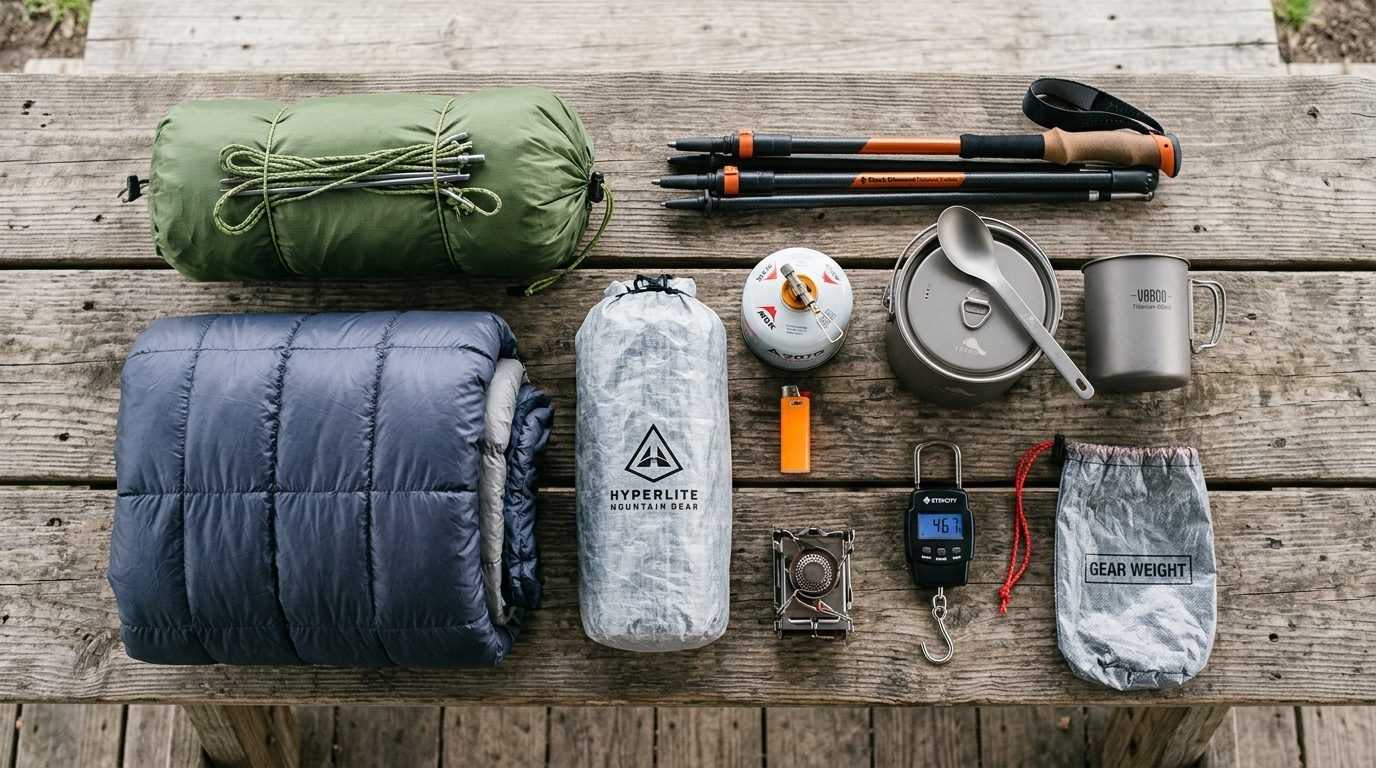
Food is one of the easiest parts of your pack weight to control. While your tent, sleeping bag, and stove have fixed weights, the weight of your food depends entirely on the types of food you pack:
Carbohydrates and proteins contain 4 calories per gram, while fats provide 9 calories per gram—more than twice as much energy for the same weight. By packing healthy fats like nuts, nut butters, and olive oil, you can carry all the calories you need while shaving pounds off your backpack.
Leave the Water Weight Behind
A 5-ounce can of tuna provides only about 130 calories (around 26 calories per ounce) because most of it is water. In contrast, 5 ounces of pecans provides nearly 1,000 calories! Carrying heavy, water-filled foods forces you to carry water on your back that you could easily collect and filter from natural streams along the trail.
Trail Food Packing & Bear Canister Tips
How to fit a week's worth of food into a bear canister without running out of room.
Get Rid of Bulky Store Packaging
Freeze-dried meal pouches from the store are full of trapped air. Repack meals into freezer ziplock bags. Prick a tiny pinhole in snack bar packages to squeeze out excess air, then tape it shut. This cuts the volume of your food almost in half.
Keep Day 1 Food Out of the Bear Can
On your first day on the trail, you will eat breakfast, trail snacks, and dinner before you go to sleep. Keep your Day 1 food in an outside pocket of your backpack rather than in your bear canister, leaving valuable room inside the can for the rest of your trip.
Drizzle Olive Oil on Hot Dinners
Carry a small, leakproof bottle of extra virgin olive oil. Drizzling two tablespoons into your freeze-dried dinner adds about 240 clean calories and healthy fats without adding noticeable bulk or weight to your pack.
Frequently Asked Questions
Clear, helpful answers to common questions about this calculation.
How much food weight should you pack per day backpacking? +
A good rule of thumb is 1.5 to 2.0 pounds (680 to 900 grams) of dry food per person per day. Long-distance hikers burning 4,000+ calories a day may need 2.0 to 2.5 pounds per day, unless they focus heavily on high-calorie foods like nuts and oils.
What is a good calorie density for backpacking food? +
Aim for an average of at least 120 to 135 calories per ounce (about 425 to 475 kcal per 100 grams). Foods with less than 100 calories per ounce (like fresh fruit, heavy cans, or wet food pouches) add a lot of water weight to your pack.
Which foods have the highest calories per ounce? +
Fats provide the most energy per ounce (about 9 calories per gram, or 255 calories per ounce). The most weight-efficient trail foods include olive oil (240 cal/oz), walnuts and pecans (195 cal/oz), peanut butter (165 cal/oz), dark chocolate (160 cal/oz), and freeze-dried meals (140 cal/oz).
Should I pack emergency food on every backpacking trip? +
Yes. Always pack at least one extra day's worth of food (about 2,000 to 2,500 calories) in case flooded river crossings, bad weather, or minor injuries delay your return.
How much food can fit inside a standard bear canister? +
A standard full-size bear canister (about 11.5 liters) can hold 6 to 8 days of food if you repack meals into ziplock bags and squeeze out all excess air.
How do you avoid getting tired of the same trail foods? +
Mix up flavors and textures so you don't get bored. Pack a few flavor enhancers (like hot sauce packets, lime packets, or spices) and balance crunchy snacks (nuts, chips) with chewy ones (dried fruit, jerky) and sweets.
Related Trail Calculators
Multi-Day Trekking
Plan multi-day backpacking trips with day-by-day calorie estimates, taking into account how your pack gets lighter as you eat your food.
Hiking Food Planner
Turn your burned calories into a practical snack list of energy bars, nuts, dried fruit, and meals, complete with total food weight to pack.
Uphill Hiking Calories
Calculate calories burned on uphill trails and mountain climbs based on hill steepness, elevation gain, hiking speed, and backpack weight.
Plan Your Whole Hike
Use our main Hiking Calorie Calculator to combine distance, hike time, hill climbing, trail terrain, and trail snacks into one clear plan.
Open Main Calculator →