How Backpack Weight Affects Energy & Calories Burned
A clear guide to how every extra pound in your backpack increases your calorie burn, tires your legs, and changes your hiking efficiency.
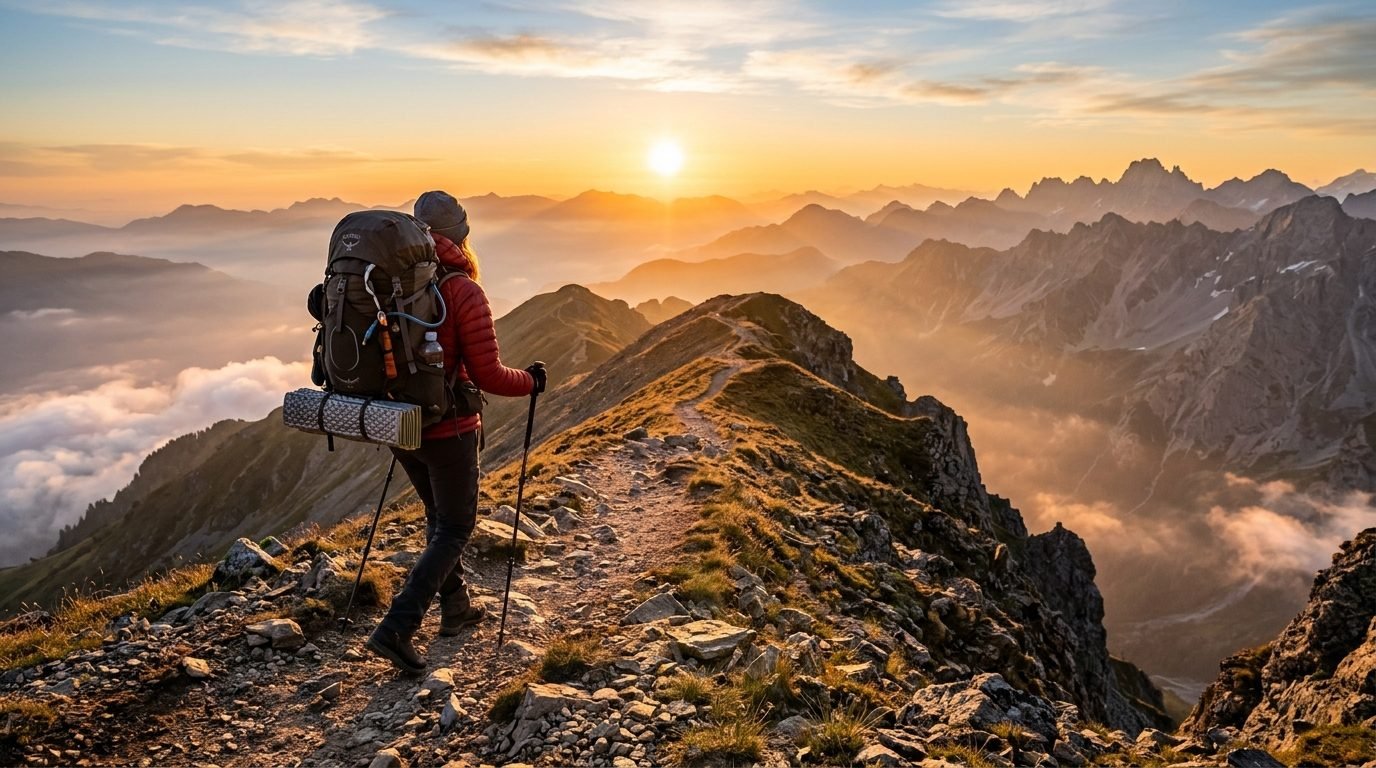
Carrying a loaded backpack turns a simple nature walk into a full-body workout. Whether you are hauling an 18 lb (8 kg) daypack with extra warm layers and snacks or a 40 lb (18 kg) multi-day pack across mountain passes, that extra weight directly changes how your body moves and how much energy you burn.
Every extra pound resting on your shoulders increases your heart rate, forces your leg and core muscles to work harder, and significantly increases your calorie burn.
Here is a clear look at how pack weight affects your body on the trail, based on military load research and mountain sports science.
The Fundamental Rule: The 1% Rule of Pack Weight
Studies conducted on hikers and soldiers have established a reliable rule of thumb for walking on flat and rolling trails:
[!IMPORTANT] The 1% Load Rule: For every 1% of body weight you add to your backpack, your body burns about 1% more calories at normal walking speeds. On steep mountain climbs, this penalty increases to 1.5% to 2.0% per percentage of body weight.
For example, consider a 165 lb (75 kg) hiker:
- Carrying a 16.5 lb (7.5 kg) daypack (10% of body weight) increases calorie burn by about 10% on flat ground and 15% on hills.
- Carrying a 50 lb (22.5 kg) expedition pack (30% of body weight) increases energy burn by 30% to 50%, burning hundreds of extra calories every hour on the trail.
Where the Extra Energy Goes
Why does carrying extra pack weight burn so much energy? It isn’t just the work of moving the weight forward—your muscles have to work continuously just to keep you upright and stable with every step:
- Your Pack Pulls You Backward: When you put on a heavy backpack, your balance shifts upward and backward. To keep from falling backward, you naturally lean forward. Holding this slight forward lean forces your lower back, hips, and neck muscles to contract constantly while you walk.
- Extra Impact on Your Knees and Joints: Every time your heel hits the ground, your body absorbs impact forces equal to about 1.2 to 1.5 times your combined weight. Carrying a 40 lb pack sends an extra 40 to 60 lbs of shock through your ankles, knees, and hips with every step, forcing your thigh muscles to absorb the impact.
- Shorter, Less Efficient Strides: Under a heavy load, hikers naturally take shorter strides and walk with a slightly wider stance to stay steady. This reduces the smooth pendulum swing of your legs, meaning your leg muscles have to push actively on every single stride.
The Pandolf Equation: How Science Calculates Pack Effort
Researchers at the U.S. Army Research Institute of Environmental Medicine developed the Pandolf equation to predict exactly how many calories soldiers burn when carrying heavy gear:
M = 1.5W + 2.0(W + L)(L / W)² + η(W + L)(1.5V² + 0.35VG)Where:
- M = Energy burned (Watts)
- W = Hiker body weight
- L = Backpack weight
- V = Walking speed
- G = Hill slope gradient (%)
- η = Ground surface roughness factor (1.0 for paved road, 1.2 for dirt trail, 1.5 for loose gravel/scree)
Why Heavy Packs Feel Exponentially Harder: (L / W)²
Look closely at the second part of the formula: 2.0(W + L)(L / W)².
Notice that pack weight ($L$) is divided by body weight ($W$) and squared. That small exponent explains why heavy packs tire you out so fast:
- With a light daypack (around 10% of body weight), the extra balance effort is tiny.
- When your pack reaches 30% of your body weight, that stabilizing effort increases nearly nine-fold!
This is why going from a 20 lb pack to a 25 lb pack feels manageable, but going from 35 lbs to 40 lbs feels exhausting. Once your pack exceeds 20% to 25% of your body weight, fatigue sets in much faster.
Test your own gear numbers using our interactive Hiking with Backpack Calories Calculator and our Rucking Calories Calculator.
Calorie Burn by Pack Weight & Trail Incline
The table below shows estimated calories burned per hour for a 165 lb (75 kg) hiker walking at a steady trail pace of 2.5 mph (4.0 km/h) across various pack weights and hill slopes on a dirt trail:
| Pack Weight | Pack % of Body Weight | Flat Trail (0% Grade) | Gentle Climb (5% Grade) | Steep Hill (10% Grade) | Mountain Climb (15% Grade) |
|---|---|---|---|---|---|
| 0 lbs (0 kg) — Unloaded Walk | 0.0% | 365 kcal/hr | 490 kcal/hr | 635 kcal/hr | 795 kcal/hr |
| 11 lbs (5 kg) — Light Daypack | 6.7% | 395 kcal/hr | 535 kcal/hr | 695 kcal/hr | 875 kcal/hr |
| 22 lbs (10 kg) — Overnight Pack | 13.3% | 435 kcal/hr | 590 kcal/hr | 770 kcal/hr | 970 kcal/hr |
| 33 lbs (15 kg) — Weekend Pack | 20.0% | 485 kcal/hr | 660 kcal/hr | 865 kcal/hr | 1,085 kcal/hr |
| 44 lbs (20 kg) — Heavy Expedition Pack | 26.7% | 550 kcal/hr | 745 kcal/hr | 975 kcal/hr | 1,225 kcal/hr |
| 55 lbs (25 kg) — Heavy Mountaineering Rig | 33.3% | 630 kcal/hr | 850 kcal/hr | 1,110 kcal/hr | 1,390 kcal/hr |
[!TIP] On a 15% mountain climb, carrying a 44 lb pack burns 430 more calories every hour than walking without a pack (1,225 vs 795 kcal). Over a 6-hour hike, that adds up to nearly 2,600 extra calories—requiring over a pound of extra food just to replenish!
Downhill Hiking with a Heavy Pack
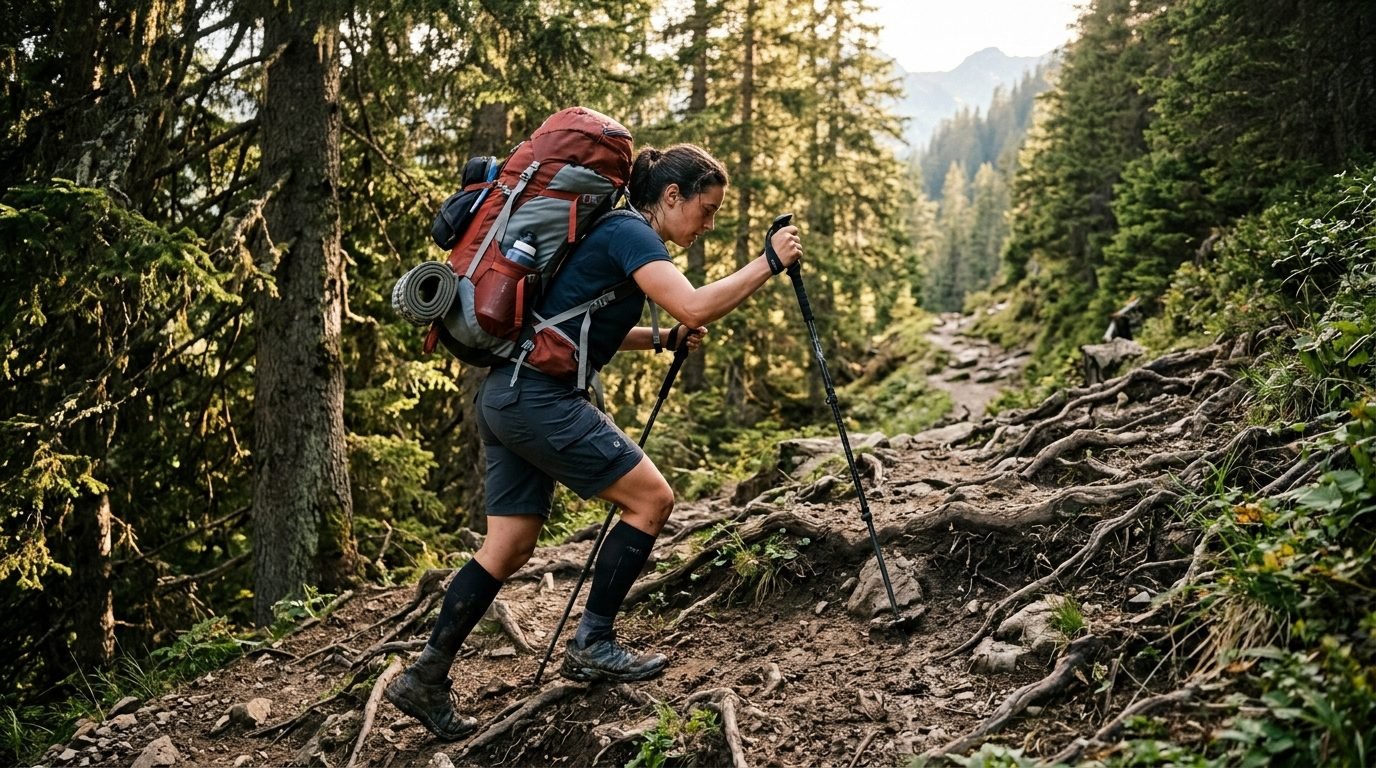
Many hikers assume that heading downhill is easy. While your heart rate and breathing slow down on descents, carrying a heavy pack downhill puts heavy strain on your knees and thigh muscles:
- The Gentle Downhill “Sweet Spot” (-8% to -10% Grade): The easiest walking occurs on a gentle descent of about -8% to -10%, where gravity helps pull you forward without forcing you to brake on each step. Here, calorie burn is at its lowest (~250 to 320 kcal/hr).
- Steep Descents (Steeper than -15% Grade): On steep downhill paths, your thigh muscles have to act as shock absorbers on every single step to stop you from tumbling forward. Calorie burn begins climbing again, and the impact force on your knees increases by up to 40% over flat walking.
Using a pair of trekking poles on steep descents transfers up to 40 lbs of pressure off your knees with each step, protecting your joint cartilage and keeping your legs fresh.
The Benefits of Lightening Your Pack
Understanding how much energy pack weight burns explains why lightweight backpacking has become so popular. When you lighten your pack’s base weight (everything in your pack except food, water, and fuel), you start a helpful chain reaction:
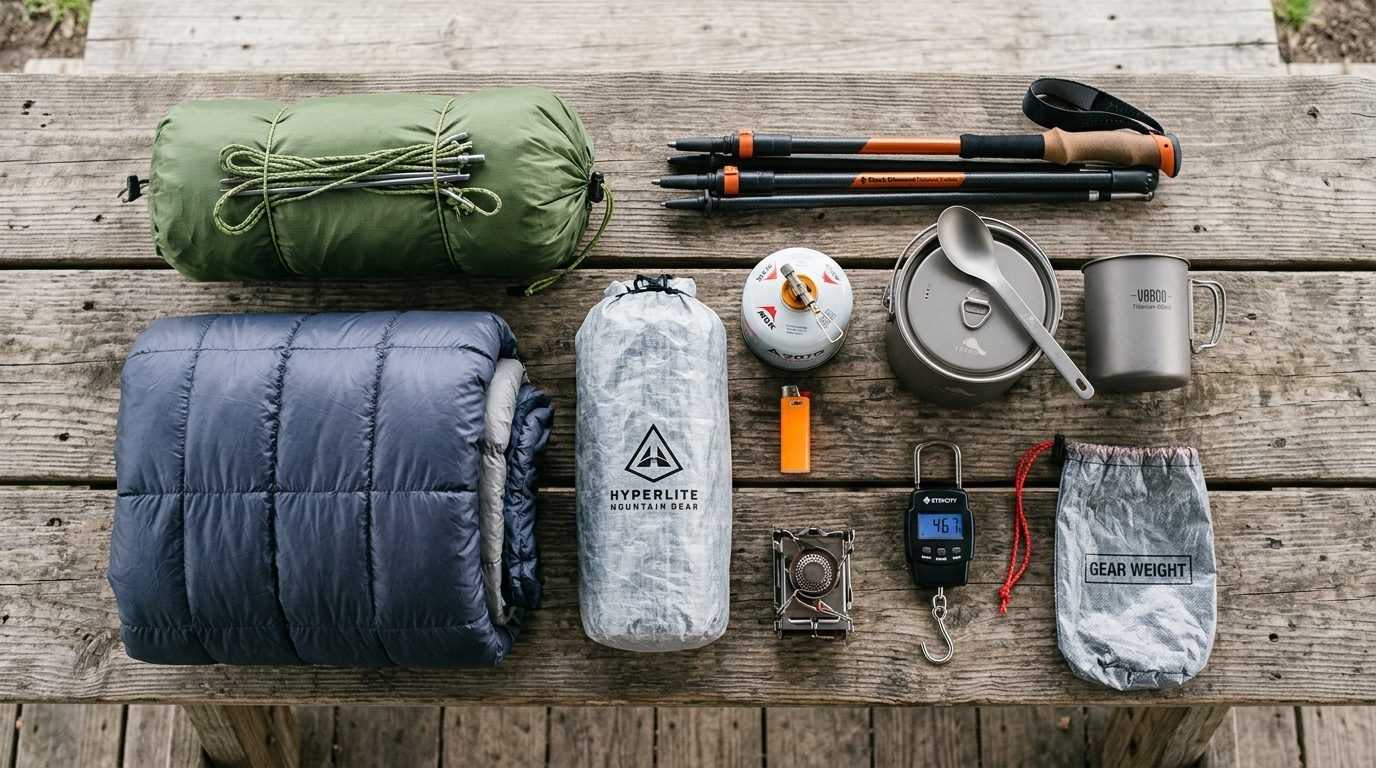
- Burn Fewer Calories: Shaving 10 lbs (4.5 kg) off your pack saves 300 to 500 calories per day on mountain trails.
- Carry Less Food: Because you burn fewer calories, you don’t need to carry as much food weight. Over a 5-day trip, that saves about a pound of food weight alone.
- Use a Lighter Backpack: A 20 lb total load doesn’t need a heavy, stiff backpack frame; it can be carried comfortably in a simpler, lighter pack, saving another 2 to 3 pounds.
- Fewer Aches and Injuries: Less impact force on each step protects your feet, ankles, and knees, dramatically reducing common trail pains like sore arches, knee pain, and blister formation.
Check your multi-day food plan with our Backpacking Food Weight Calculator and Multi-Day Hiking Calories Calculator.
Footwear Weight: The 5-to-1 Rule
When trying to save energy on the trail, where you put that weight matters just as much as how much you carry.
Decades of exercise testing have proven a famous hiking rule:
1 lb on your feet = 5 lbs on your backBecause your feet are at the end of your legs, you have to lift and swing that footwear weight with every step you take. Heavy 3.5 lb leather boots consume about 5 times more energy to swing forward than a 10 oz pair of lightweight trail running shoes.
Switching from heavy traditional boots to lightweight trail shoes provides the energy equivalent of taking 10 to 15 pounds off your backpack!
How to Pack Your Backpack for Easy Carrying
How you pack your gear directly affects how heavy the pack feels and how much energy you spend fighting to stay balanced:
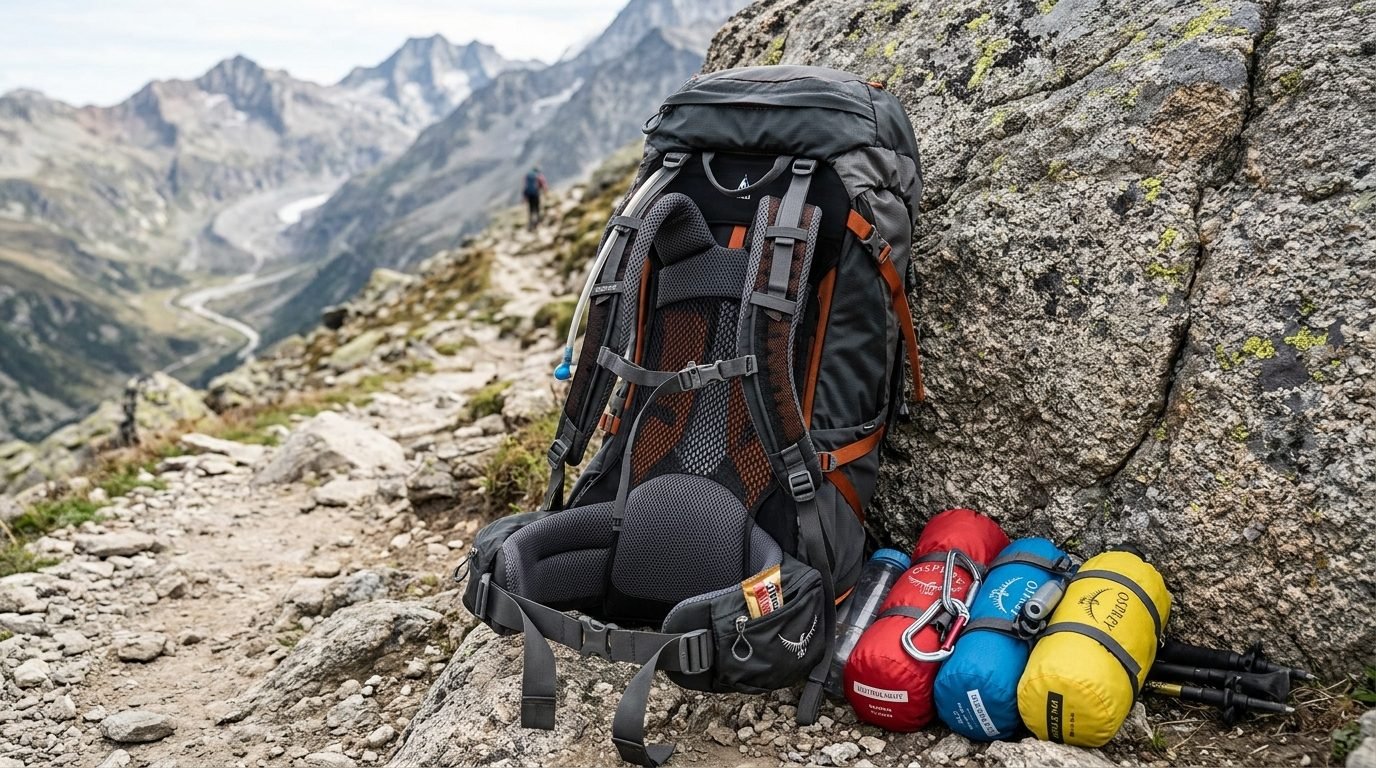
- Heavy Gear (Food bag, water bladder, camp stove): Place these items close to your back, right between your shoulder blades. Keeping the heaviest gear centered over your spine prevents the pack from pulling you backward.
- Medium Gear (Tent, extra clothing, cooking pot): Pack these toward the outside and top of the main compartment.
- Light Gear (Sleeping bag, sleeping pad, camp pillow): Pack these at the very bottom of your backpack to create a stable, cushioned base.
- Trail Essentials (Rain jacket, first aid, snacks, water filter): Keep these in exterior pockets or the top lid for easy access without opening your main pack.
Frequently Asked Questions
How heavy should my backpack be relative to my body weight?
As a general guideline, try to keep your pack under 15% to 20% of your body weight for day hikes, and under 20% to 25% for multi-day backpacking trips. For a 160 lb hiker, that means keeping a daypack under 25 to 30 lbs and an overnight pack under 35 to 40 lbs. Above 25% to 30%, fatigue sets in much faster and joint stress rises sharply.
How many extra calories does a 30 lb backpack burn per hour?
For an average 165 lb (75 kg) hiker walking at 2.5 mph on a rolling trail with gentle hills, carrying a 30 lb pack burns about 150 to 190 extra calories per hour compared to walking without a pack. Over a 6-hour hike, that adds up to 900 to 1,140 extra calories.
Does rucking burn more calories than regular walking?
Yes. Rucking (walking with a weighted backpack on flat or paved paths) burns about 40% to 80% more calories than regular walking at the same speed. A brisk 45-minute walk with a 30 lb pack burns roughly 400 to 500 calories, while walking without weight burns only about 200 to 250 calories. Learn more with our Rucking Calories Calculator.
Why does a good hip belt make a backpack feel lighter?
A properly adjusted hip belt transfers 75% to 85% of your pack’s weight directly onto your hip bones, bypassing your spine and shoulders. This takes painful pressure off your neck and shoulder muscles, keeping you more upright and saving a substantial amount of muscle energy over a long day on the trail.
Calculate Your Next Route
Test your pack weight, moving time, and elevation gain in our free tool.