Hiking Calorie Calculator
RESEARCH & BIBLIOGRAPHY

Scientific Sources & Research Studies

Hiking Calorie Calculator is built on published sports science, university exercise research, and mountain pacing studies. Below is the complete list of primary sources and reference literature.

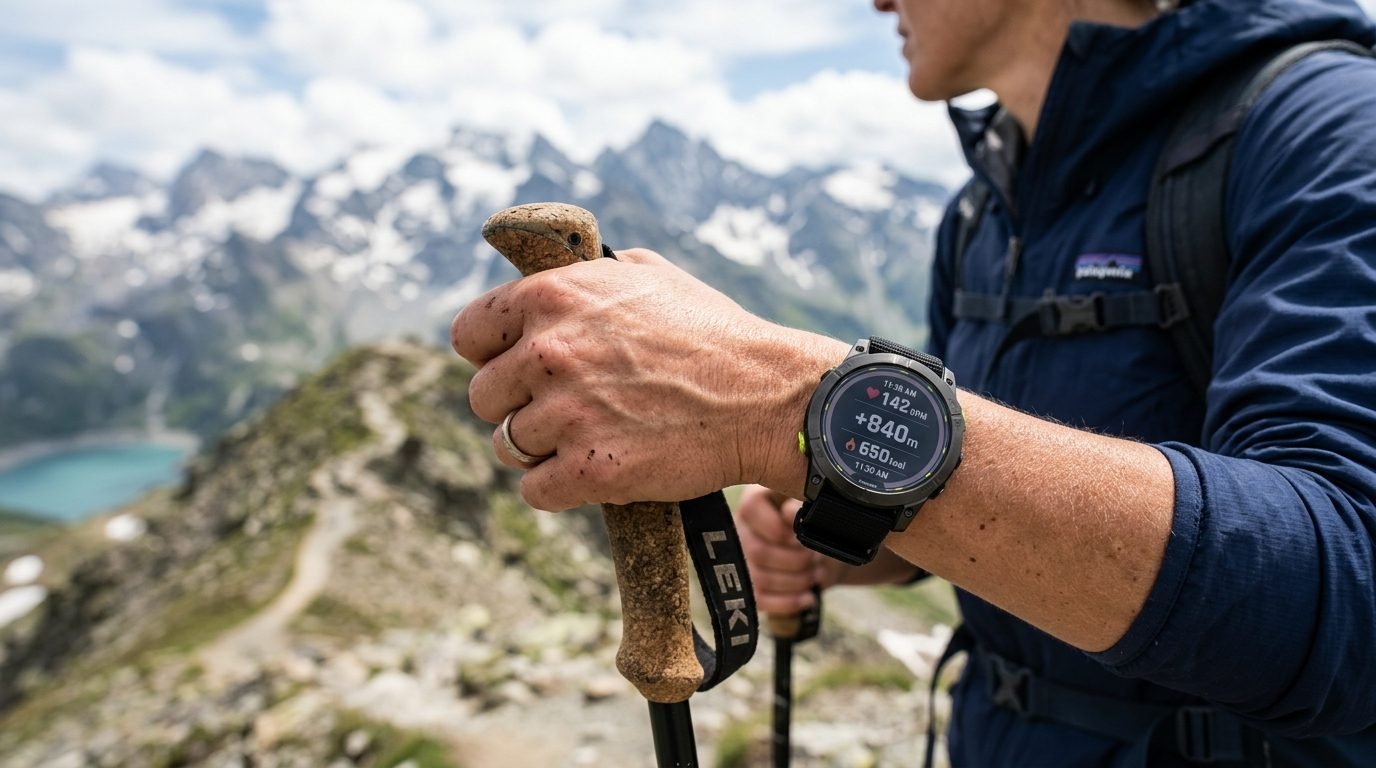
Outdoor physiology monitoring with GPS watch on mountain trail
11 Peer-Reviewed Citations 1892 – 2024
Activity Energy Rates Source #01

Ainsworth, B. E., et al. (2024). 2024 Adult Compendium of Physical Activities: A third update of activity codes and MET values. Medicine & Science in Sports & Exercise.

The official standard for human exercise and energy burn, providing verified energy ratings for walking, trail hiking, hill climbing, and backpacking.

Backpack Weight Science Source #02

Pandolf, K. B., Givoni, B., & Goldman, R. F. (1977). Predicting energy expenditure with loads while standing or walking very slowly. Journal of Applied Physiology, 43(4), 577–581.

The foundational formula developed by U.S. Army researchers measuring how body weight, backpack load, speed, hill steepness, and rough ground increase calorie burn.

Downhill Walking & Braking Source #03

Santee, W. R., Allison, W. F., Blanchard, L. A., & Small, M. G. (2003). A proposed model for estimating energy cost of human downhill walking. Aviation, Space, and Environmental Medicine, 74(4), 434–439.

Showed that while gentle downhills feel easy, steep descents require leg muscles to brake continuously with every step, which burns extra calories.

Walking & Incline Formulas Source #04

American College of Sports Medicine. (2018). ACSM's Guidelines for Exercise Testing and Prescription (10th ed.). Philadelphia: Wolters Kluwer.

Standard clinical formulas measuring how much energy you burn walking on flat surfaces and uphill inclines.

Trail Pacing & Speed Source #05

Tobler, W. (1993). Three presentations on geographical analysis and modeling: Non-isotropic modeling, Speculations on the geometry of geography, and Global spatial analysis. National Center for Geographic Information and Analysis, Technical Report 93-1.

Created the famous hiking function showing how walking speed naturally slows on steep climbs and peaks on gentle downhill slopes.

Mountain Pacing Rules Source #06

Naismith, W. (1892). Excursions: Cruach Ardran. Scottish Mountaineering Club Journal, 2(3), 136.

The classic mountaineer's rule of thumb: allow 1 hour for every 5 km (3 miles) of distance plus 1 hour for every 600 meters (2,000 feet) of climb.

Hill Climb Pacing Source #07

Langmuir, E. (1984). Mountaincraft and Leadership. The Scottish Sports Council and Mountain Leader Training Board.

Refined mountain pacing rules for rough terrain, adding pace adjustments for gentle slopes and steep rocky descents.

Steep Slope Studies Source #08

Minetti, A. E., Moia, C., Roi, G. S., Susta, D., & Ferretti, G. (2002). Energy cost of walking and running at extreme uphill and downhill slopes. Journal of Applied Physiology, 93(3), 1039–1046.

Field study examining how energy burn changes on extreme slopes up to 45 degrees, revealing how muscles work on steep mountain paths.

Trail Nutrition Guidelines Source #09

American Orthopaedic Society for Sports Medicine (AOSSM) & ACSM Joint Consensus. Nutrition and Athletic Performance. (2016). Medicine & Science in Sports & Exercise, 48(3), 543–568.

Evidence-based guidelines recommending 30 to 60 grams of carbs per hour during long outdoor workouts to keep energy levels steady.

Older Adult Bioenergetics (60+) Source #10

Herrmann, S. D., Willis, E. A., Ainsworth, B. E., et al. (2024). 2024 Compendium of Physical Activities: Older Adult Specific Energy Costs. Medicine & Science in Sports & Exercise.

Documents higher relative oxygen consumption and energetic cost of walking on uneven ground for adults aged 60+, demonstrating an approximate 10–15% increase in baseline hiking MET costs.

Loaded Ascent & Descent Dynamics Source #11

Looney, D. P., Potter, A. W., Pryor, J. L., et al. (2021). Metabolic Costs of Military Load Carriage: Uphill, Downhill, and Level Walking. Medicine & Science in Sports & Exercise, 53(9), 1957–1966.

Contemporary evaluation of Pandolf equation accuracy with modern ergonomic backpacks across varied inclines (-15% to +15%), confirming eccentric muscle braking costs.