Hiking Calorie Calculator
Official Trail Effort Ratings

Hiking & Walking Effort Ratings & Calorie Table

The official effort levels (MET values) for trail hiking, hill climbing, backpacking, and walking. Enter your weight to see real-time calorie burn across every hiking style.

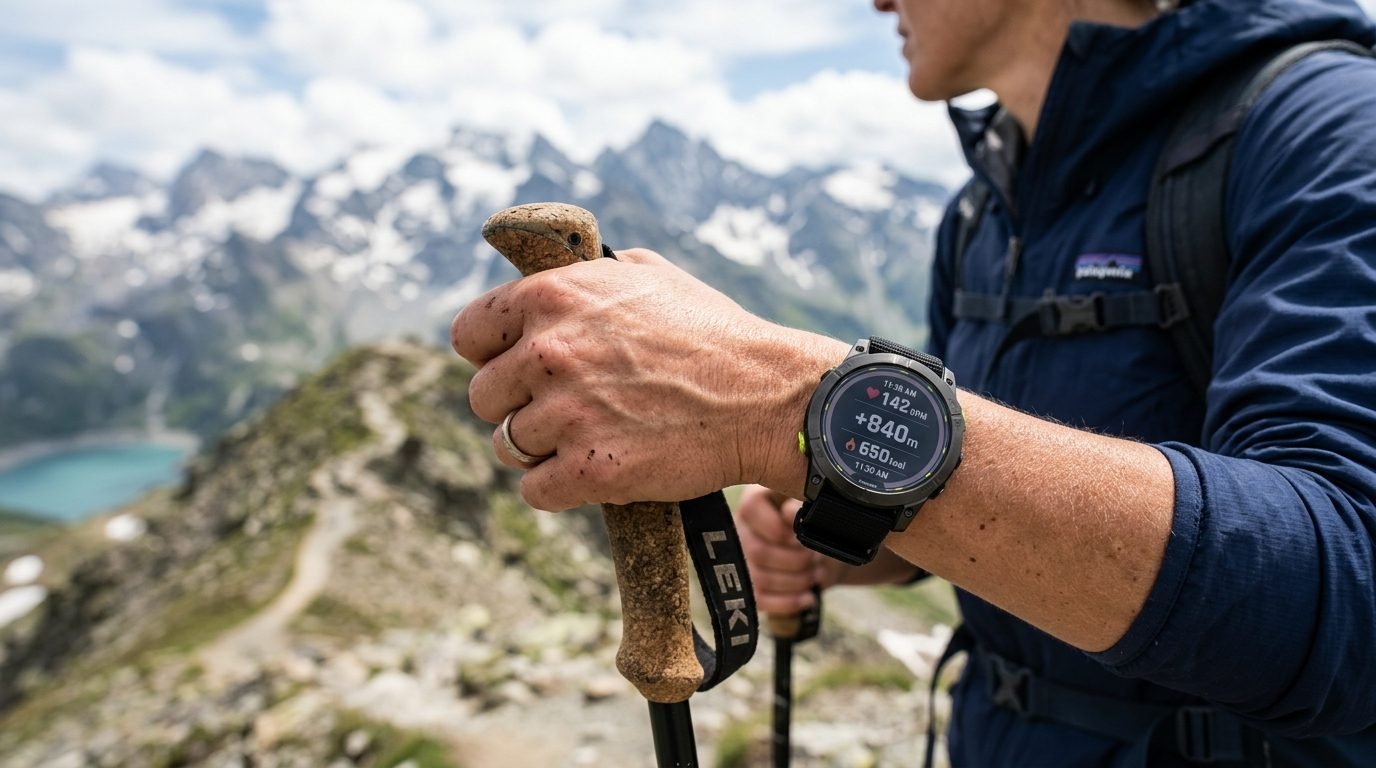
Hiker monitoring GPS watch altitude and heart rate telemetry on alpine ridge
2024 Compendium MET Codes 3.5–10.0 MET
kg
hours
Filter:
Code Activity Effort Rating (MET) Includes Pack? Burn Rate (cal/hr) Total Calories Hiking-Only Calories
17081
Walking / hiking, ambling, leisurely pace
Gentle walking or ambling on natural flat pathways or gentle park paths without a pack.
3.8
Unloaded -- -- --
17082
Hiking, normal trail pace (fields or hillsides)
Standard day hike across meadows, woodland, dirt trails, and rolling countryside.
5.3
Unloaded -- -- --
17080
Hiking, cross country
Moderate to brisk trail hiking over mixed uneven terrain, tree roots, and dirt grades.
6.0
Unloaded -- -- --
17035
Climbing hills, no load (6–10% grade, brisk)
Sustained uphill ascent at moderate to brisk pace without carrying equipment.
7.0
Unloaded -- -- --
17010
Backpacking, general expedition load
Multi-day wilderness trekking carrying a full self-supported expedition pack (30–45 lbs).
7.0
Pack Included -- -- --
17012
Hiking with daypack (5–10 kg / 11–22 lb)
Mountain trail hiking carrying hydration, layers, food rations, and safety gear.
7.8
Pack Included -- -- --
17036
Mountain climbing / steep ascent (11–20% grade)
Challenging steep slope climbing without a heavy pack; demanding on heart and lungs.
8.8
Unloaded -- -- --
17060
Loaded hill climbing (20+ lb pack, 5–20% grade)
High-intensity mountain ascent carrying weighted pack over steep backcountry terrain.
10.0
Pack Included -- -- --
17150
Walking, 3.0 mph (4.8 km/h), level firm ground
Standard moderate walking pace on flat asphalt, sidewalk, or paved promenade.
3.5
Unloaded -- -- --
17170
Walking, 3.5–4.0 mph (5.6–6.4 km/h), brisk pace
Aerobic fitness walking on level ground with active arm swing.
4.8
Unloaded -- -- --
17160
Walking on grass, uneven park lawn
Walking on natural grass and turf, which takes slightly more effort than flat pavement.
4.8
Unloaded -- -- --
17165
Walking in soft snow or loose dry sand
Soft ground that shifts underfoot, making leg muscles work significantly harder.
5.8
Unloaded -- -- --
17200
Nordic walking (with poles), flat ground
Walking with trekking poles, actively using your arms, shoulders, and upper body.
5.2
Unloaded -- -- --
17210
Nordic walking, uphill mountain grade
Uphill climbing using trekking poles to help push with your arms, core, and shoulders.
8.0
Unloaded -- -- --
17070
Rucking / military march with heavy pack
Fast paced marching on roads or hard trails with standard military ruck load (35–45 lbs).
9.0
Pack Included -- -- --

How Trail Effort Ratings (METs) Work

What Is an Effort Rating (MET)?

A MET (Metabolic Equivalent of Task) is a simple way to measure how hard your body is working compared to resting quietly on the couch.

In sports science, 1.0 MET is your baseline resting burn:

1.0 MET ≈ 1 calorie burned per kilogram of body weight per hour (resting)

This means an activity rated 7.0 (like backpacking with an overnight pack) burns roughly 7 times as many calories as sitting quietly.

Total Calories vs. Hiking-Only Calories

When looking at fitness trackers and outdoor apps, understanding the difference between Total and Hiking-Only calories helps you plan food properly:

  • Total Calories (Gross): Everything your body burned while on the trail, including baseline energy needed to stay alive.
    Total Calories = MET × Body Weight (kg) × Hours
  • Hiking-Only Calories (Active): The extra calories burned purely from physical walking effort.
    Hiking-Only = (MET - 1.0) × Body Weight (kg) × Hours

Watch Out: Don't Double-Count Backpack Weight

A common mistake in fitness apps is adding backpack weight on top of an activity that already assumes you are carrying a pack (such as code 17010 or 17012). That inflates your calorie count by 25% to 40%! When an activity already includes a backpack, use just your body weight, or use our dedicated Backpack Hiking Calorie Calculator.

Source: Ainsworth BE, et al. 2024 Adult Compendium of Physical Activities.