Hiking vs Walking Calorie Calculator — Side-by-Side Comparison
Compare calories burned hiking vs walking side by side. See why trail terrain friction, incline, and backpack load burn up to 100% more calories.
Workout Settings
Trail Conditions
Applied to Hike OnlyCompares flat pavement walking with trail hiking, showing the extra effort from climbing, uneven ground, and pack weight. Read formula documentation →
Where Do the Extra Hiking Calories Come From?
See how hill climbing, uneven footing, and pack weight combine to burn far more energy than city walking.
Worked Example: 2-Hour Side-by-Side Activity Match
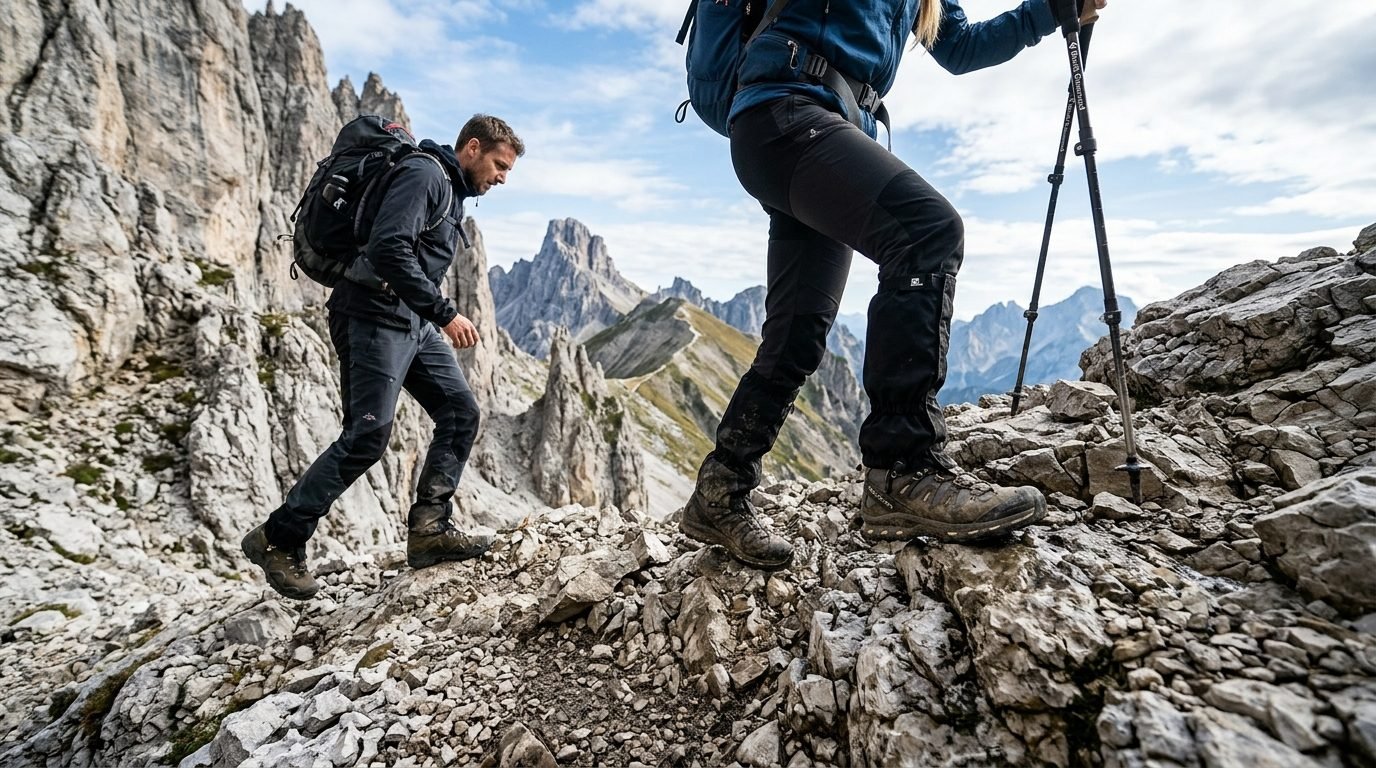
A 154 lb (70 kg) person exercising for 2 hours at 2.8 mph (4.5 km/h). Comparing walking on flat asphalt (0% grade, no pack) vs hiking on a mountain trail (+8% average incline, carrying a 13 lb / 6 kg daypack).
Example Inputs
- Body Weight
- 154 lb (70 kg)
- Duration
- 2 hours 00 minutes
- Speed
- 2.8 mph (4.5 km/h / 5.6 mi total)
- Trail Incline
- +8% slope vs 0% flat road
- Backpack Weight
- 13.2 lb (6 kg) on trail vs 0 kg
Because hiking involves climbing hills (+8% grade), balancing over uneven ground, and carrying a 13 lb daypack, it burns more than double the calories of walking on a flat sidewalk for the exact same amount of time.
Hiking vs Walking Calorie Comparison Table
Select your body weight to compare calories burned across different workout lengths for flat walking, rolling trails, and mountain hikes.
| Workout Time | Flat Walking | Rolling Forest Trail | Mountain Climb | Hiking Advantage | Flat Miles Needed to Match |
|---|
How the Calculation Works
Proven sports science formulas and practical trail estimates.
Why Trail Hiking Burns More Than Pavement Walking
When people compare walking and hiking, they often focus solely on distance. But walking on a flat, smooth sidewalk is one of the most efficient movements your body can make, burning minimal calories.
Hiking introduces three big factors that ramp up your calorie burn:
- Climbing Hills: Lifting your body weight vertically against gravity is by far the biggest calorie burner in mountain hiking.
- Uneven Footing: Natural ground (dirt, rocks, sand) yields under your feet, preventing the easy spring-back you get on concrete and forcing stabilizing muscles in your feet, ankles, and legs to work constantly.
- Backpack Weight: Carrying a daypack forces your core and back muscles to work harder with every step to keep you balanced.
Natural Trails vs City Sidewalks
On a flat sidewalk, your legs act like smooth pendulums, recycling much of your forward momentum from one step to the next. On a trail with rocks, tree roots, and dirt steps, that smooth bounce disappears. Your stabilizer muscles work continuously to keep you upright, which significantly elevates your heart rate and calorie burn.
Transitioning from City Walking to Mountain Hiking
How to prepare your feet, legs, and balance when stepping off paved sidewalks and onto natural dirt trails.
Pick Shoes with Good Grip
Smooth running shoes slip easily on loose gravel and wet tree roots. Choose trail runners or hiking boots with deep rubber lugs on the sole and a protective toe cap to guard against stubbed toes on rocky paths.
Prepare Your Thighs for Downhills
City walkers are often surprised by how sore their thighs feel after a hike with long descents. On downhills, your thigh muscles act as brakes with every step. Doing step-downs or gentle squats during the week prepares your legs for downhill mountain trails.
Build Ankle Balance
Prevent twisted ankles by practicing balancing on one leg for 30 to 60 seconds while brushing your teeth. This simple habit trains the small stabilizing muscles around your ankles to react quickly whenever you step on an uneven rock or root.
Frequently Asked Questions
Clear, helpful answers to common questions about this calculation.
Does hiking burn more calories than walking? +
Yes, significantly more. Hiking typically burns 50% to 120% more calories than walking on flat pavement at the same pace. The three main reasons are climbing hills against gravity, balancing on uneven ground like rocks and roots, and carrying a backpack.
What is the effort rating difference between hiking and walking? +
Normal walking on flat ground takes about 3 to 3.5 times your resting energy (3.0 to 3.5 METs). Walking on a rolling nature trail requires 5 to 6 times resting energy, and climbing steep mountain hills with a backpack can exceed 8 to 10 times resting energy.
Is hiking better than running for joint health and fat loss? +
Hiking is an excellent low-impact alternative to running. Because one foot always stays on the ground, joint impact is much lower, while the calories you burn hiking up hills often match or beat an easy jog.
Why does uneven trail ground burn more calories than smooth pavement? +
On smooth pavement, your tendons act like springs, bouncing you forward with very little wasted effort. On uneven trails with rocks, roots, and soft dirt, your feet slip slightly and your body has to work constantly to stay balanced, engaging stabilizing muscles throughout your feet, ankles, and core.
Can walking on an incline treadmill replace outdoor trail hiking? +
An incline treadmill does a great job copying the vertical hill-climbing work, but it lacks the side-to-side balancing, foot adjustments, and downhill knee cushioning required by natural outdoor trails.
How many miles of flat walking equal 1 hour of steep mountain hiking? +
Because mountain hiking burns 450 to 600 calories an hour, you would need to walk about 4.5 to 6.0 miles (7 to 10 km) on flat pavement—taking about 1.5 to 2.0 hours—to burn the same amount of calories as just 1 hour of mountain hiking.
Related Trail Calculators
Rucking Calories
Calculate calories burned walking with a weighted backpack or weighted vest on roads and trails.
Backpacking Calories
Estimate calories burned on wilderness backpacking trips carrying 30 to 50 lb packs over rugged backcountry trails.
Calories by Distance
Calculate calories burned hiking 3 miles, 5 miles, 10 miles, or any custom distance, with easy adjustments for hills and pack weight.
Plan Your Whole Hike
Use our main Hiking Calorie Calculator to combine distance, hike time, hill climbing, trail terrain, and trail snacks into one clear plan.
Open Main Calculator →